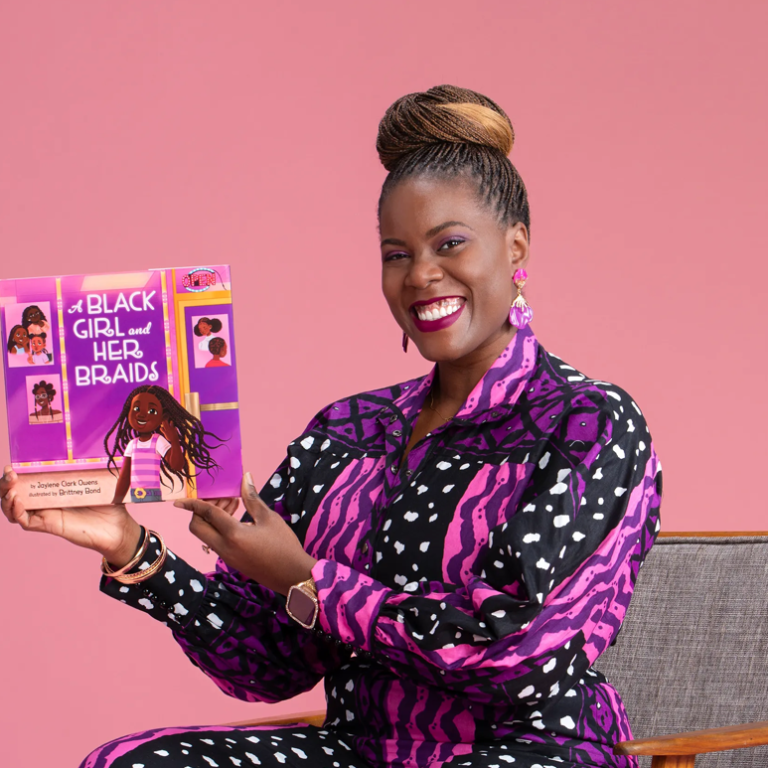

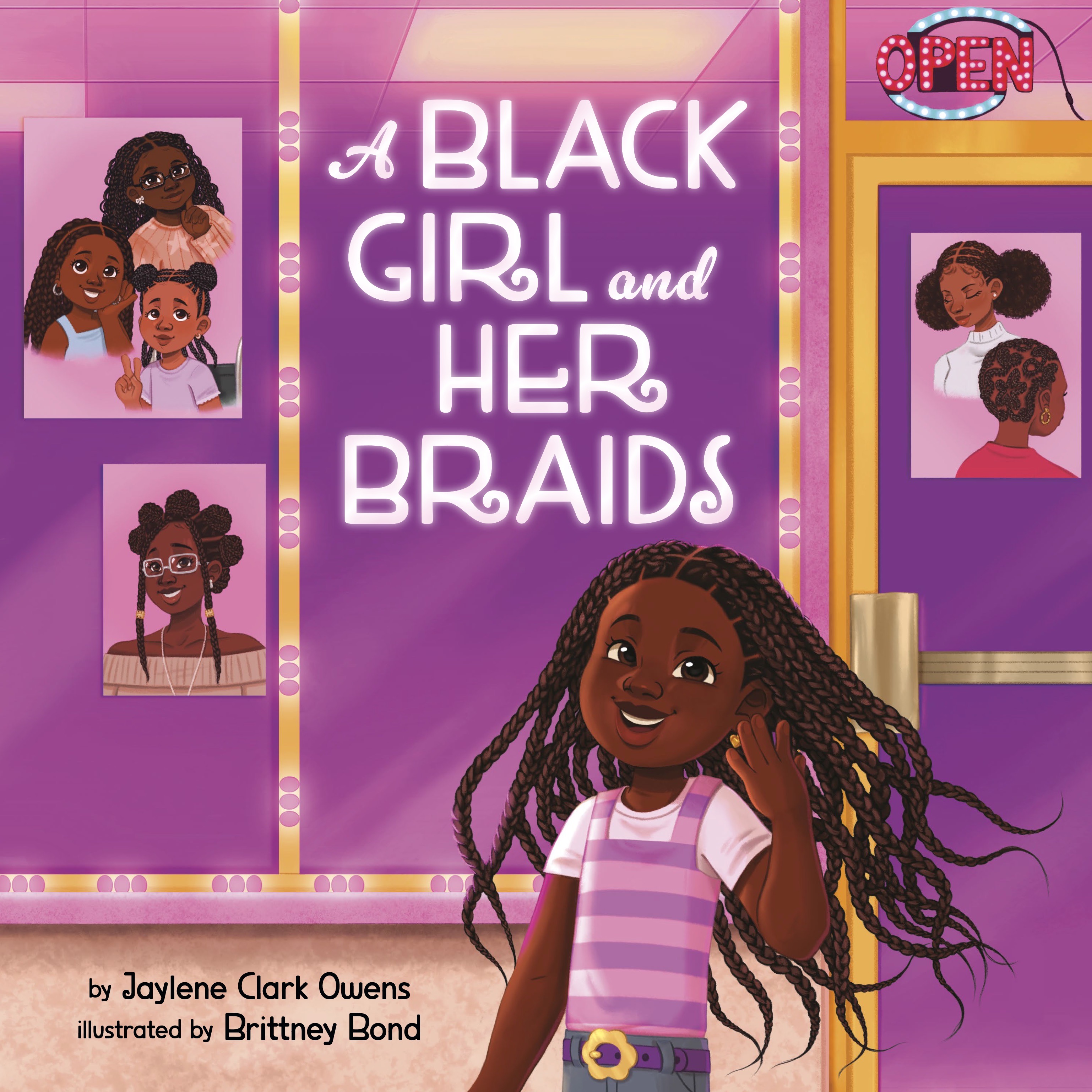
Nothing compares to a Black girl and her braids. From cornrows and box braids to crochet styles, braids are a foundational part of the Black girl experience. They carry culture, creativity, and self-expression in every plait. We spoke with actor, poet, and author Jaylene Clark Owens about her new children’s book, A Black Girl and Her Braids, which began as a viral poem. It has since grown into a powerful celebration of Black girl joy, beauty, and cultural pride.
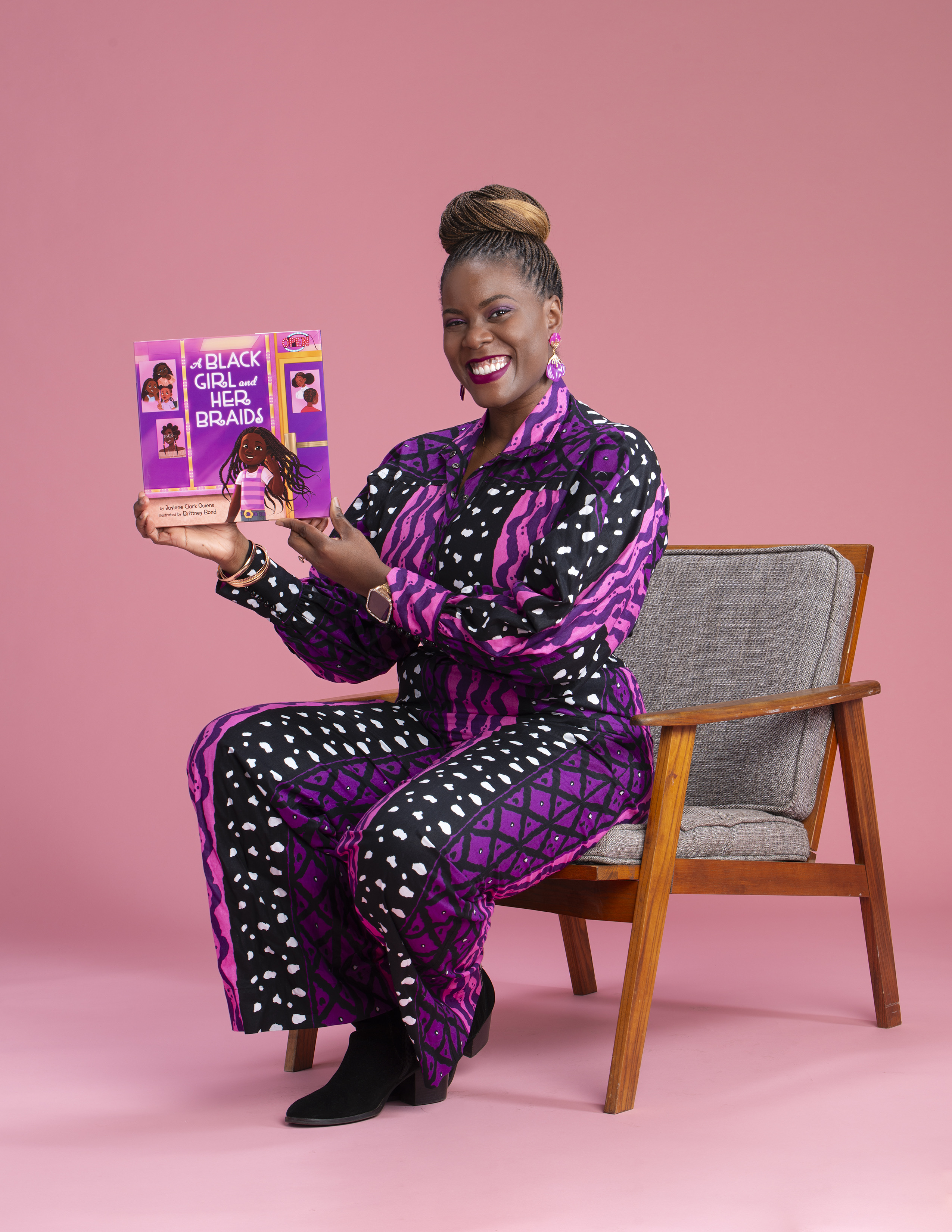
Madam J: So nice meeting you Jaylene! Can you tell us a synopsis of who you are and your work?
Jaylene Clark Owens: It is such a pleasure to meet you as well! I am an AUDELCO and Barrymore award-winning actress, acclaimed spoken word poet, and author. I am from Harlem and currently living in the Greater Philadelphia region. As an actress, I have graced the stage, film, and television. I play Rosie in the hit WHYY PBS Kids show, “Albie’s Elevator,” and have appeared several times on “Law & Order.” My spoken word poetry career spans over twenty years, and features work that has resonated with thousands. My EP, “A Black Girl and Her Hair,” has over 11 million streams across streaming platforms and social media. My viral poem, “A Black Girl and Her Braids,” has been adapted into a children’s picture book published by Penguin Random House.
MJ: When you first created your “A Black Girl and Her Braids” poem, did you anticipate it going viral?
JCO: I certainly wanted it to resonate with Black women everywhere, but I had no idea it would take off the way that it did! From the United States to Nigeria to Germany, Black women all over the world have connected to “A Black Girl and Her Braids!”
MJ: What was your reaction to seeing influential voices using your poem?
JCO: I was extremely excited to see influential voices using my poem! When I saw Tia Mowry use my poem, I cried tears of joy. When I was in elementary school and the teachers would ask us to write about our heroes, I would always write about Tia and Tamera Mowry because I admired their work on “Sister, Sister.” I wanted to act and sing just like them. “Sister, Sister” still plays in my house on the daily, so seeing Tia show love to my work was a truly special, full circle moment. Seeing people like Tracee Ellis Ross, Kandi Burruss, and Kerry Washington use my poem let me know that my work is truly spreading far and wide, not just in my inner circle!
MJ: Do you have any fond memories as a child of getting your hair braided and how it made you feel?
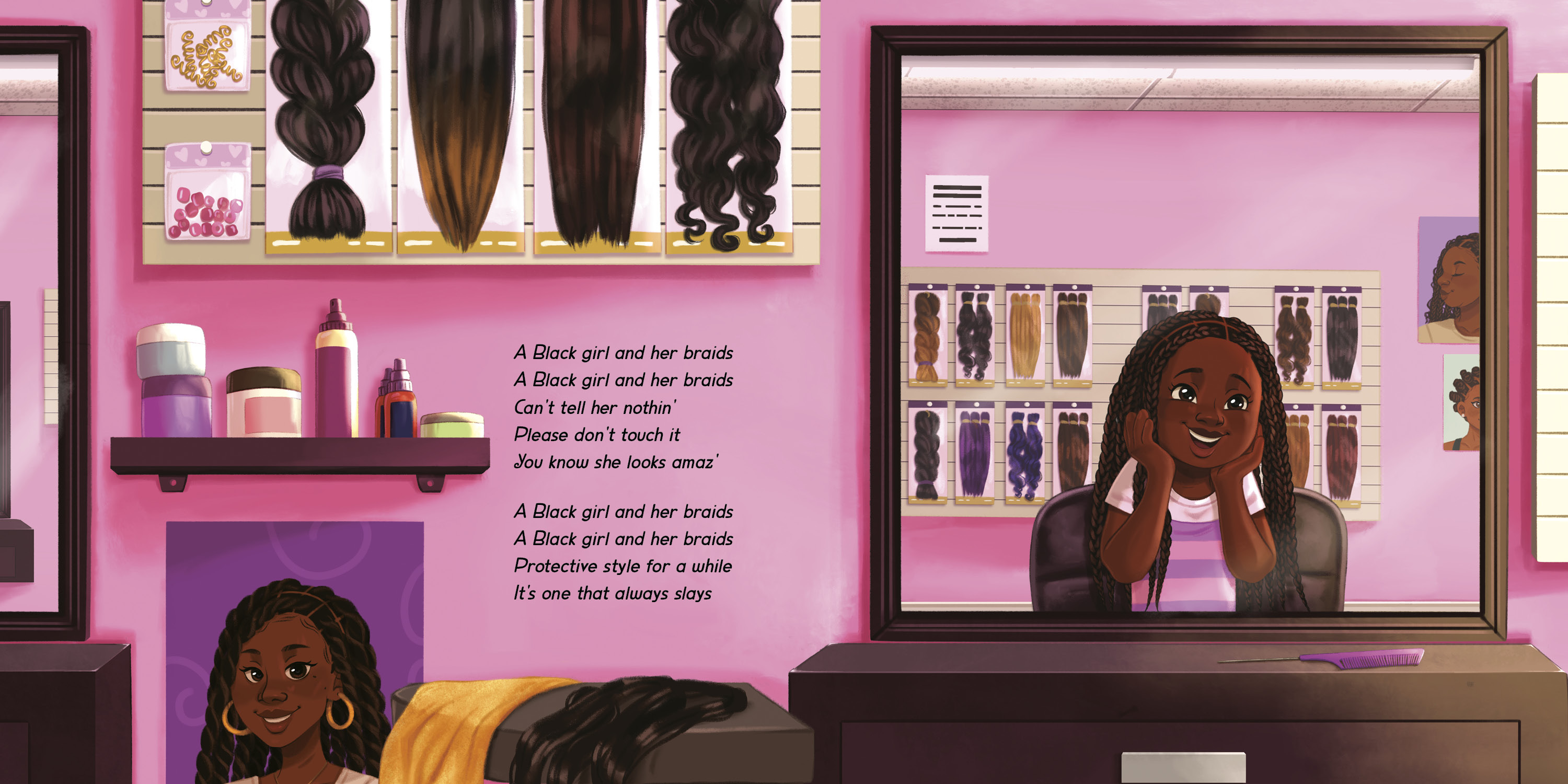
JCO: Absolutely! My first memories of getting my hair braided are of my mom cornrowing my hair. These are my fondest memories because of the love I have for my mom. I remember sitting on the floor between her legs with a comb on one side, and grease on the other. My hair was always braided in simple underhand cornrows, sometimes with colorful barrettes. I remember the first time I got extensions from this braider in Brooklyn, and I fell in love. An especially fond memory I have of getting extensions as a child is when my best friend, Hollis, and I went to an African Hair Braiding Salon in Harlem and got matching box braids, complete with the burnt ends that were the style of the 90s! You really couldn’t tell us nothin’. I think that’s why I put that line in “A Black Girl and Her Braids!” “Can’t tell her nothin’ / Please don’t touch it”
MJ: What’s your favorite braided hairstyle? Do you prefer cornrows, knotless braids, crochet, or any type of braids?
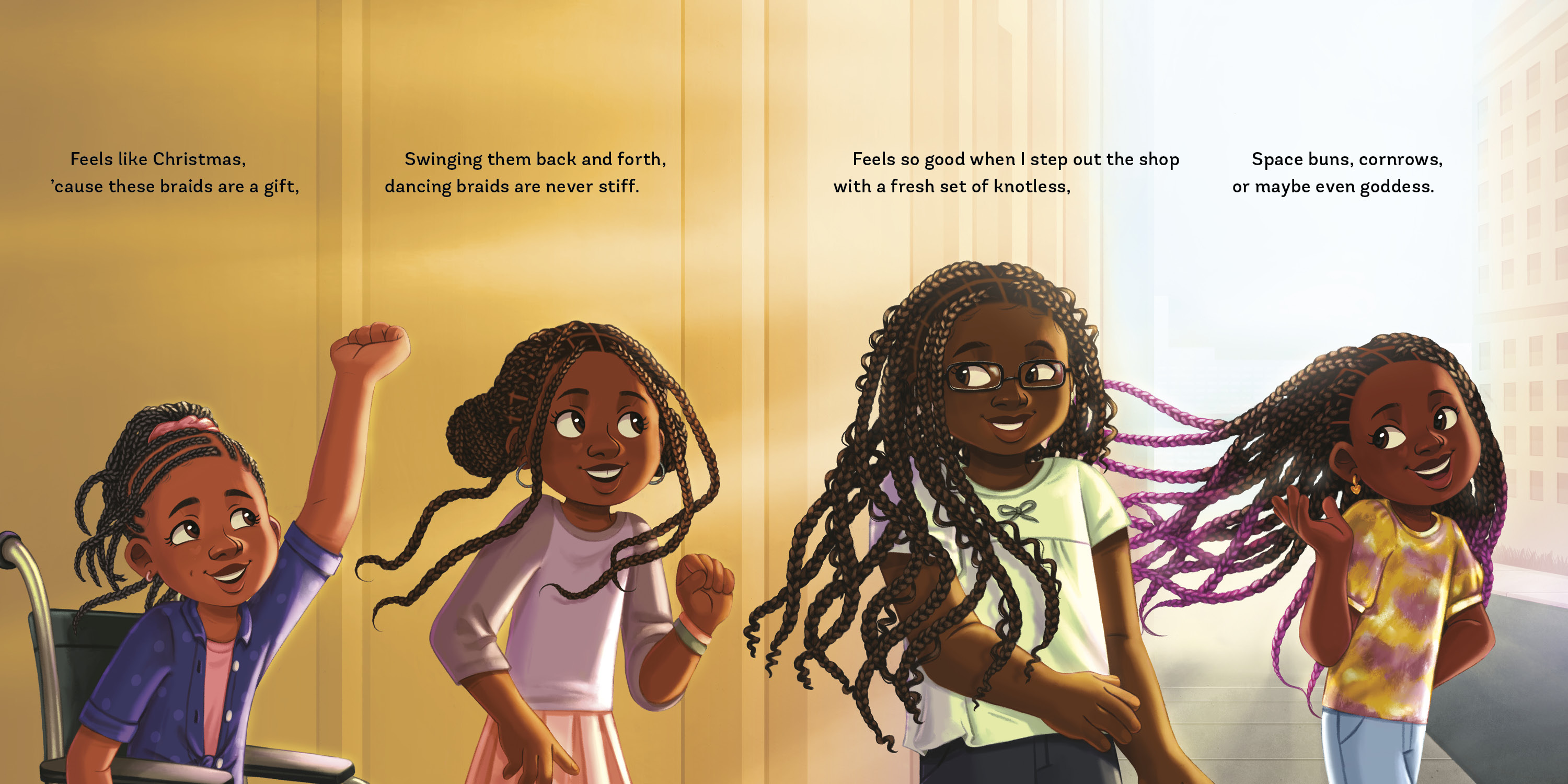
JCO: I think my favorite braided hairstyle is medium box braids, with the knot at the start! Knotless braids are so cute and neat, and they are literally the braids that inspired “A Black Girl and Her Braids,” but I do love the fullness of classic box braids down my back! I love how you can style them in so many ways, getting numerous styles out of one hairstyle! Thanks to social media I am exposed to so many different types of styles, so I certainly love experimenting with braided updos, crochet, koroba, and more!
MJ: What’s something you wish you could tell your younger self about your hair?
JCO: I wish I could tell my younger self that those underhand cornrows are braided from a beautiful afro that you should feel proud to wear. I would tell her that she can wear her ‘fro in a twist out, a braid out, bantu knots, the possibilities are endless! As a child, once I felt I outgrew the styles my mother would do, I felt like I needed to get a perm and straighten my hair to look beautiful. I didn’t even think of the option of just wearing my hair out. I wish I never permed my hair, which caused so much damage, but it is part of my hair story and journey that brought me to this point, where I am creating art that affirms the beauty of our hair!
MJ: Congratulations on your book release for “A Black Girl and Her Braids.” What are you feeling in this moment now that this beautiful work of art has been released?
JCO: Thank you! I am feeling joyous, excited, and affirmed! I have spent almost three years with this book so it feels so good to finally have it out in the world! I have been crying happy tears almost every day since its release as I see people responding so positively to the book.
MJ: What message do you hope readers leave with after reading your new book?
JCO: I hope readers leave knowing that their hair is beautiful, meaningful, and worthy of celebration. I want Black girls to feel affirmed in who they are and proud of their braids, while all readers walk away with a deeper understanding of the cultural, historical, and emotional significance of braids. For Black girls especially, I want them to know that they should never feel ashamed of their braids and that their braids should be accepted everywhere, just like them!
MJ: Is there any advice you can give to those looking to write their own book?
JCO: If you are looking to write a book, study authors who are writing in the genre in which you are interested. For example, if you want to write children’s picture books, follow other picture book authors. Take notes on the events they attend, the way they promote their books, and take any classes that they offer. I learned so much about how to market my book from studying what other authors have done, such as author, Luvvie Ajayi Jones.
MJ: Where can we purchase your books and book tour tickets?
JCO: You can purchase my book by visiting my website, JayleneClarkOwens.com, where you will find a link giving you several options for purchase, such as Barnes & Noble, Amazon, and Bookshop.org, where you can purchase from independent bookstores. You can purchase book tour tickets by visiting the Upcoming page on my website, which lists all my events.