
Written By: Charron Monaye
As Congress debates the Safeguard American Voter Eligibility Act often referred to in its updated form as the SAVE America Act, a broader question is emerging beyond election security: who, in practice, will find it harder to vote? The Safeguard American Voter Eligibility Act, commonly known as the SAVE Act, is one such piece of legislation. Positioned as a measure to strengthen election integrity, it may also redefine who participates in American democracy, particularly women.
At its core, the SAVE Act would require voters to provide documentary proof of U.S. citizenship such as a passport or birth certificate, when registering or updating voter information. It would also limit or eliminate widely used systems like online and mail-in registration, shifting more responsibility onto in-person verification. For millions of Americans, this represents a procedural change. For many women, it could become a structural barrier.
Where The Impact Becomes Real
- Name Change Complications: A majority of women change their last name after marriage, creating mismatches between birth certificates and current IDs—potentially requiring additional legal documentation to verify identity.
- Reduced Registration Access: Limitations on online and mail-in registration disproportionately affect women who rely on flexible, remote options due to work and caregiving demands.
- Time Constraints: Women shoulder a larger share of caregiving responsibilities, making in-person requirements more burdensome and less feasible.
- Higher Administrative Burden: Multiple steps to verify identity can discourage or delay voter registration, especially for those already balancing competing priorities.
- Economic Barriers: Costs associated with obtaining passports, birth certificates, or legal documents can disproportionately impact lower-income women.
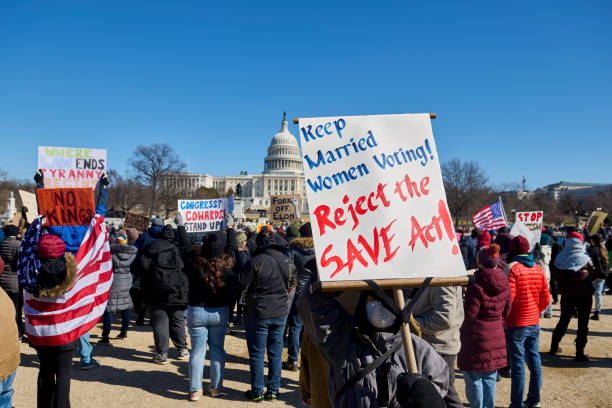
The impact begins with a uniquely gendered reality: name changes. A significant majority of women in the United States change their last name after marriage. While culturally normalized, this practice creates a disconnect between birth certificates and current legal identification. Under stricter documentation rules, that gap becomes more than administrative it becomes disqualifying. Women may be required to produce additional legal documents, navigate complex verification processes, or face delays that ultimately discourage participation.
Beyond documentation, the SAVE Act intersects with another critical dynamic time. Women continue to carry a disproportionate share of caregiving responsibilities, whether for children, aging parents, or both. Policies that require in-person registration, repeated paperwork, or extended follow-up effectively raise the cost of voting, not just financially, but logistically. In an economy where time is already scarce, even minor increases in administrative burden can have outsized effects on participation.
There is also a financial dimension that cannot be ignored. While proof-of-citizenship documents may sound standard, access to them is not universal. Passports require fees and processing time. Birth certificates may need to be requested across state lines, often at a cost. For lower-income women who are disproportionately represented among hourly workers and single-parent households these hurdles compound quickly. What appears to be a simple requirement becomes, in practice, a gatekeeping mechanism.
The Broader Business & Policy Implications
- Participation Shapes Policy: Lower voter participation among women could influence policy outcomes on healthcare, education, and labor.
- Workforce Ripple Effects: Policies shaped by a narrower electorate may affect workplace protections, pay equity, and family leave structures.
- Economic Representation: Women drive a significant share of consumer spending; reduced civic influence can indirectly impact economic priorities and market behavior.
- Equity And Access Risk: Companies prioritizing DEI (Diversity, Equity, and Inclusion) may face a shifting external environment as civic access changes.
From a market perspective, participation is everything. In business, barriers to entry determine who competes and who is left out. The same principle applies to democracy. When access becomes more complex, participation narrows. And when participation narrows, influence follows. Women, who make up a majority of the U.S. electorate, have played a decisive role in shaping outcomes on issues ranging from healthcare to economic policy. Any shift that reduces their turnout has ripple effects far beyond the ballot box.
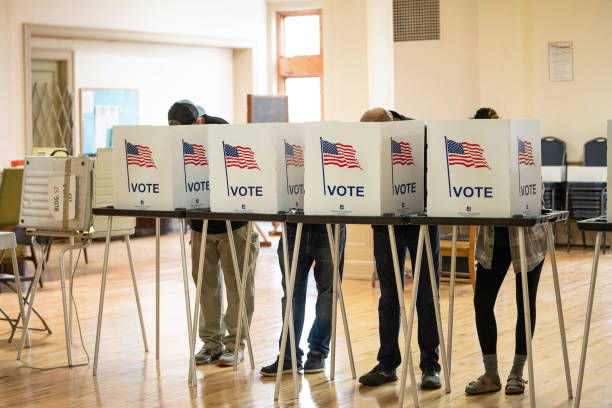
Supporters of the SAVE Act argue that requiring proof of citizenship is a necessary step to safeguard elections. Critics counter that instances of noncitizen voting are exceedingly rare, making the policy a broad solution to a limited problem. But the strategic question is less about intent and more about outcome. Even well-intentioned policies can produce uneven results when they intersect with existing social and economic realities.
The bottom line: legislation that changes how people vote ultimately changes who votes. And in the case of the SAVE Act, the women who have long been a driving force in American civic life may find themselves navigating new and unexpected barriers to being heard.