

Written By: Charron Monaye
The promise of American citizenship begins with a single sentence enshrined in the Fourteenth Amendment, Section 1 to the United States Constitution, a line written in the shadow of civil war that has defined the nation’s identity for more than 150 years. “All persons born or naturalized in the United States, and subject to the jurisdiction thereof, are citizens of the United States and of the State wherein they reside. No State shall make or enforce any law which shall abridge the privileges or immunities of citizens of the United States; nor shall any State deprive any person of life, liberty, or property, without due process of law; nor deny to any person within its jurisdiction the equal protection of the laws.” It is an amendment that has long been treated as settled law, a cornerstone of the American legal framework and a defining feature of its democratic ethos.
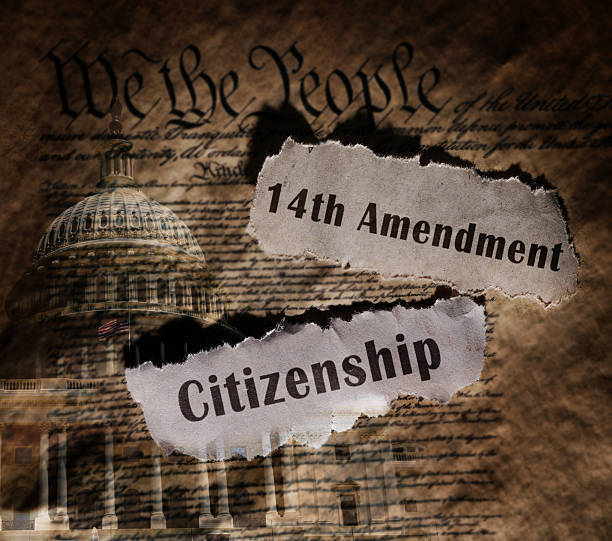
Yet today, that promise is facing one of its most serious challenges in modern history.
The legal bedrock of birthright citizenship was cemented in United States v. Wong Kim Ark, where the Supreme Court affirmed that a child born on U.S. soil to foreign parents is, with narrow exceptions, a citizen. For generations, that ruling has guided courts, policymakers, and immigration systems alike. It has ensured clarity: birthplace, not bloodline, determines citizenship.
But critics now argue that the clarity is overstated.
At the heart of the renewed challenge is a phrase often overlooked outside legal circles, “subject to the jurisdiction thereof.” Some legal scholars and political figures contend that this language was never intended to apply universally, particularly to children born to individuals in the country unlawfully. Their argument is not merely academic; it is a direct invitation to reconsider a century-old interpretation that has shaped millions of lives. Supporters of the current framework, however, see the issue differently. They argue that the Constitution’s text, reinforced by longstanding precedent, leaves little room for reinterpretation. To them, revisiting birthright citizenship through executive action or judicial narrowing would represent not evolution, but erosion, attempt to redefine a constitutional guarantee without the rigor of amendment.
Who Does This Affect & Who Stands to Lose
The immediate impact of any change to birthright citizenship would fall on children born in the United States to non-citizen parents, particularly those without legal immigration status. Under current law, these children are citizens at birth. A reinterpretation could strip that automatic guarantee, leaving their status uncertain or contingent. But the ripple effects would extend further. Mixed-status families, households where some members are citizens and others are not, could face heightened legal and emotional strain. U.S.-born children could find their citizenship questioned or delayed. Immigrant communities broadly, including lawful permanent residents and visa holders, could encounter new layers of scrutiny and documentation requirements when establishing their children’s status.

There is also a broader class of Americans who could be indirectly affected: those whose citizenship relies on documentation rather than unquestioned assumption. If citizenship becomes something that must be proven at birth rather than granted, it could introduce new administrative hurdles that disproportionately impact lower-income families, rural communities, and those without immediate access to legal resources. In the most far-reaching scenario, critics warn of the potential emergence of a stateless population, individuals born in the United States who are not recognized as citizens by any country. While such an outcome would likely face significant legal challenges, the mere possibility underscores the stakes of the debate.
What President Donald Trump Is Asking For
At the center of the modern political push to revisit birthright citizenship is Donald Trump. The case commonly referred to as Trump v. Barbara challenges a January 2025 executive order seeking to end automatic citizenship for certain children born in the United States. The order asserts that babies born on U.S. soil would not be automatically entitled to citizenship if their parents are in the country either unlawfully or on a temporary basis.
In its brief on the merits, the Trump administration argues that the executive action simply restores the original meaning of the Fourteenth Amendment to the United States Constitution. Writing for the administration, U.S. Solicitor General D. John Sauer contends that the Citizenship Clause was intended primarily to overturn Dred Scott v. Sandford and secure citizenship for formerly enslaved people and their children, not to extend automatic citizenship to the children of noncitizens temporarily present in the United States. To support this interpretation, the administration points to early Supreme Court rulings. In The Slaughter-House Cases, the Court described the Amendment’s central purpose as ensuring the freedom and protection of formerly enslaved individuals. Similarly, in Elk v. Wilkins, the Court emphasized that the clause was designed to resolve the citizenship status of freed slaves.
Building on this historical framing, the administration argues that being “subject to the jurisdiction” of the United States requires complete political allegiance. Under this view, citizenship extends to children of U.S. citizens and lawful permanent residents, those with a lasting, established presence in the country, but not to children of individuals who are only temporarily present or who maintain primary allegiance to another nation.
By focusing on the “subject to the jurisdiction thereof” language, they aim to prompt a judicial reconsideration of longstanding precedent, including United States v. Wong Kim Ark. Supporters frame the effort as a necessary correction to immigration policy and constitutional interpretation, while opponents warn it could undermine a clear and settled guarantee, introducing legal uncertainty where stability has long prevailed.
A Defining Question for the Nation
The stakes extend far beyond legal theory.
If the interpretation of birthright citizenship were to shift, the United States could move away from a jus soli system, citizenship by birthplace, toward one more dependent on parentage. Such a transition would mark a profound departure from the country’s historical approach and align it more closely with nations that condition citizenship on lineage rather than location. The practical implications could be equally significant. Citizenship, once automatic at birth, could become contingent, subject to verification of parental status, documentation, and potentially prolonged legal scrutiny. Hospitals, courts, and federal agencies would be thrust into new roles as arbiters of identity, tasked with determining who qualifies as American at the moment of birth.
Birthright citizenship has long functioned as more than a legal rule; it has served as a statement of national character. It embodies the idea that America is not defined solely by ancestry or origin, but by the simple, unifying fact of being born within its borders. Now, a question once thought settled has returned with urgency: Is American citizenship an inheritance of place, or a privilege to be redefined?
The answer may determine not only the reach of the Constitution, but the future of the American idea itself.