
Written By: Charron Monaye
You are more than what happened to you, what people said about you, what you lost, or what you are going through. Never allow a temporary chapter to define your entire story.

There is a dangerous habit many people develop without even realizing it: they begin to identify themselves by the circumstances they are experiencing rather than by the person they are becoming. They allow a temporary setback to become a permanent label, a painful experience to become their entire personality, and someone else’s opinion to become the foundation of their self-worth. But here is a truth worth remembering: temporary information should never become the permanent definition of who you are or who you are becoming.
Life is constantly changing. Seasons shift. Relationships end. Opportunities disappear. Plans fall apart. People misunderstand you. Sometimes, even your own decisions lead you into situations you never imagined you would face. Yet none of these moments, by themselves, has the authority to define the totality of your identity. You may be experiencing a season of uncertainty, but uncertainty is not your identity. You may have experienced failure, but failure is not your identity. You may have been rejected, abandoned, overlooked, betrayed, or underestimated, but none of those experiences has the final word on who you are. The problem begins when we stop saying, “This is something I am experiencing,” and start saying, “This is who I am.”
There is a difference between being in a difficult season and believing you are a difficult person. There is a difference between making a mistake and believing you are a mistake. There is a difference between being rejected by someone and believing you are unworthy of love. One describes an experience. The other creates an identity. And when you confuse the two, you risk building your entire life around information that may change tomorrow.
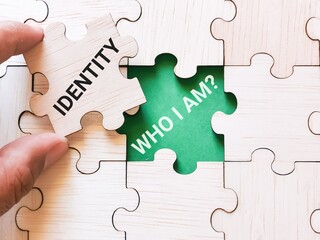
Your Current Circumstances Are Not Your Final Identity
Imagine building a house on land that is constantly shifting. No matter how beautiful the structure looks, its foundation will eventually be challenged. The same principle applies to the way you see yourself.
- If your identity is built on success, what happens when you fail?
- If your identity is built on being accepted, what happens when people reject you?
- If your identity is built on a relationship, what happens when that relationship ends?
- If your identity is built on a job title, a financial status, a physical appearance, or public recognition, what happens when those things change?
- When your identity depends entirely on external conditions, every change in your circumstances becomes a threat to your sense of self.
You begin to chase validation because you do not feel valuable without it. You become afraid of failure because you believe failure will expose you as inadequate. You remain in unhealthy situations because walking away feels like losing the person you have worked so hard to become. But your identity must be rooted in something deeper than what you possess, what you accomplish, who stands beside you, or what others think about you. You need a foundation that can withstand life’s changing conditions. Your values. Your character. Your principles. Your purpose. Your capacity to learn, grow, and make different choices. These are the things that help you remain grounded when life becomes unpredictable.
Stop Allowing People to Turn Their Opinions Into Your Identity
One of the most damaging things you can do is accept someone else’s limited perspective as the complete truth about yourself. People will form opinions about you based on a moment, a misunderstanding, a mistake, or a version of you they encountered years ago. Some will remember your lowest point long after you have grown beyond it. Others may judge your future by the limitations they see in your present. And sometimes, the people who speak the loudest about who you are know the least about who you are becoming.
Their opinions may be information, but they are not automatically truth. Their perceptions may reveal how they see you, but they do not establish the boundaries of your potential. You must learn to distinguish between constructive feedback and destructive labeling. Constructive feedback helps you recognize an area where you can improve. Destructive labeling attempts to convince you that your mistake is your identity.
- One says, “You handled that situation poorly.”
- The other says, “You will never get anything right.”
One leaves room for growth. The other attempts to close the door on it.
You can take responsibility for your actions without accepting a lifetime sentence against your character. You can acknowledge where you were wrong without believing you are incapable of doing right. You can listen to criticism without surrendering your authority to determine who you are becoming. Let me let you in on a big secret: “You are allowed to outgrow the version of yourself that other people have become comfortable criticizing.” You do not need everyone’s permission to evolve.
Do Not Make Permanent Decisions Based on Temporary Emotions
Pain has a way of making the present feel permanent. When you are disappointed, it can feel as though nothing will ever work out. When you are lonely, it can seem as though you will always be alone. When you are overwhelmed, you may begin to question your abilities, your direction, and even your worth. Emotions are real, and they deserve attention. But emotions are not always accurate predictions of the future. Feeling defeated does not mean you are destined to lose. Feeling uncertain does not mean you have no direction. Feeling unqualified does not automatically mean you lack the ability to learn.
A difficult day is not a complete assessment of your life. A painful season is not a forecast of every season to come. This is why you must be careful about the conclusions you draw when you are hurting. Do not decide that you are incapable simply because something did not work. Do not conclude that you are unlovable because someone failed to love you well. Do not abandon your purpose because your progress has become slower than you expected. Give yourself room to feel without allowing every feeling to become a belief. Sometimes, the most powerful thing you can do is pause long enough to recognize that what you feel today may not be what you understand tomorrow.
Your Past Is Part of Your Story, Not the Owner of Your Future
Your past contains information. It tells you where you have been, what you have experienced, what decisions you have made, and what lessons you may need to carry forward. But your past is not entitled to own your future. Perhaps you made choices you regret. Perhaps you trusted people who hurt you. Perhaps you spent years trying to become someone others would accept. Maybe you lost time, missed opportunities, or allowed fear to keep you from pursuing what mattered to you.
You cannot rewrite every chapter that has already been written. However, you can decide how those chapters influence the ones you write next. Growth requires the courage to tell the truth about your past without remaining trapped inside it. You can acknowledge what happened without allowing it to define everything that happens next. You can learn from your mistakes without repeatedly punishing yourself for them. You can recognize patterns that no longer serve you and begin making choices that reflect the person you want to become. Healing does not require you to pretend the past never happened. It requires you to stop treating the past as the only evidence of who you can be.
You are not obligated to remain loyal to an outdated version of yourself.
The person you were when you lacked understanding does not have to be the person you are after gaining wisdom. The person you were when you were afraid does not have to make every decision for the person you are becoming. The person who survived a difficult season deserves the opportunity to experience life beyond survival.
Your history matters, but it does not have to become your permanent home.
Learn the Difference Between Facts and Labels
A fact describes something that happened. A label often turns that experience into a sweeping judgment about who you are.
- You lost your job. That is a circumstance. “I am a failure” is a label.
- A relationship ended. That is an experience. “I am impossible to love” is a conclusion.
- You made a poor decision. That is an action. “I will always make bad decisions” is a prediction.
- You are struggling financially. That is a condition. “I will never have a better life” is a belief about the future.
Notice how quickly information can become an identity when it goes unchallenged. The words you repeatedly speak over yourself can influence how you interpret your experiences, the opportunities you pursue, and the risks you are willing to take. When you believe you are incapable, you may stop trying. When you believe you are unworthy, you may tolerate treatment you should question. When you believe your past determines your future, you may overlook the possibilities available to you today. This does not mean you should ignore reality or replace every difficult truth with a positive statement. It means you should describe your reality accurately without exaggerating its authority over your life.
- Instead of saying, “I am a failure,” say, “That attempt did not produce the result I wanted, and I can learn from it.”
- Instead of saying, “I will never recover,” say, “I am still working through this, and I do not yet know everything that is possible.”
- Instead of saying, “This is all I will ever be,” say, “This is where I am right now, not necessarily where I will remain.”
There is power in giving yourself room to grow.

Build Your Identity on What Remains When Everything Changes
If temporary information is not a reliable foundation for your identity, what is? Begin with your core values. Decide what matters to you beyond applause, achievement, and acceptance. Determine the principles you want to live by, the character you want to develop, and the kind of person you want to be when life does not go according to plan. Build your identity around the qualities you practice rather than the circumstances you cannot always control.
- You may not be able to control whether everyone understands you, but you can work toward communicating honestly.
- You may not be able to control every outcome, but you can choose to act with integrity.
- You may not be able to prevent every disappointment, but you can develop the courage to respond without allowing disappointment to destroy your sense of worth.
- You may not be able to change what happened yesterday, but you can make decisions today that align with your values.
This is what a grounded identity looks like. It does not mean you never struggle, question yourself, or experience uncertainty. It means those experiences do not automatically erase your understanding of who you are. You can experience change without losing yourself. You can acknowledge weakness while developing strength. You can admit that you need help without deciding that you are helpless.
A strong identity is not the belief that you are perfect. It is the understanding that your imperfections do not cancel your capacity for growth.
Give Yourself Permission to Become
One of the greatest forms of freedom is allowing yourself to become someone new without constantly defending who you used to be. People may remember your former decisions. They may question your new boundaries. They may struggle to understand why you no longer respond the way you once did. Your growth may challenge the expectations they formed when they first knew you.
Let them adjust.
You do not have to prove that you have changed by arguing with everyone who remembers your past. Consistent choices, honest accountability, and sustained growth will speak more clearly than endless explanations. Be willing to change your mind when you gain new understanding. Be willing to learn when you discover what you do not know. Be willing to apologize when you recognize harm you have caused. Be willing to walk away from identities you adopted simply to survive, fit in, or gain approval. And be willing to embrace possibilities that once felt beyond your reach. You are not betraying your past by growing beyond it. You are honoring the lessons it taught you. The goal is not to become a stranger to yourself. The goal is to become more fully aligned with the person you are capable of being.
Do Not Let a Temporary Chapter Write Your Permanent Story
Life will continue to give you new information. Some of it will encourage you. Some of it will challenge you. Some of it will reveal truths you need to confront, and some of it will test whether you have built your identity on something strong enough to endure change. When the information changes, your understanding of your circumstances may need to change with it. But do not confuse a change in circumstances with a loss of worth. You are more than your last mistake, your latest disappointment, your current financial situation, your relationship status, your professional title, or the opinions circulating about you. You are a person who can learn, choose, develop, recover, and grow. That does not erase your responsibility for the choices you make. It reminds you that responsibility and possibility can exist together. So, the next time life gives you information that threatens to redefine you, pause before accepting its verdict.
Ask yourself: Is this a fact about my present circumstances, or am I turning it into a permanent statement about who I am?
Am I learning from this experience, or am I allowing it to limit my future?
Am I responding to what is true, or am I allowing fear, shame, disappointment, or someone else’s opinion to tell me who I must remain?
Remember this: Never build your permanent identity on temporary information.
Build it on character. Build it on values. Build it on truth, self-awareness, accountability, and the willingness to keep growing. Because seasons change. Circumstances shift. People leave. Opportunities come and go. The information you have today may look entirely different tomorrow. And when that happens, you deserve an identity that is strong enough to stand beyond the season you are in. Your current situation may describe where you are. It does not have to define who you are. And it certainly does not get to decide who you can become.