

Written By: Charron Monaye
On April 1, 2026, history turns its gaze back to the Moon.
For the first time in more than half a century, astronauts are embarking on a mission that rekindles the spirit of exploration once defined by Apollo 11 Moon Landing. This launch represents not just a return, but a reinvention, powered by new technology, broader international collaboration, and a vision that extends far beyond planting a flag.
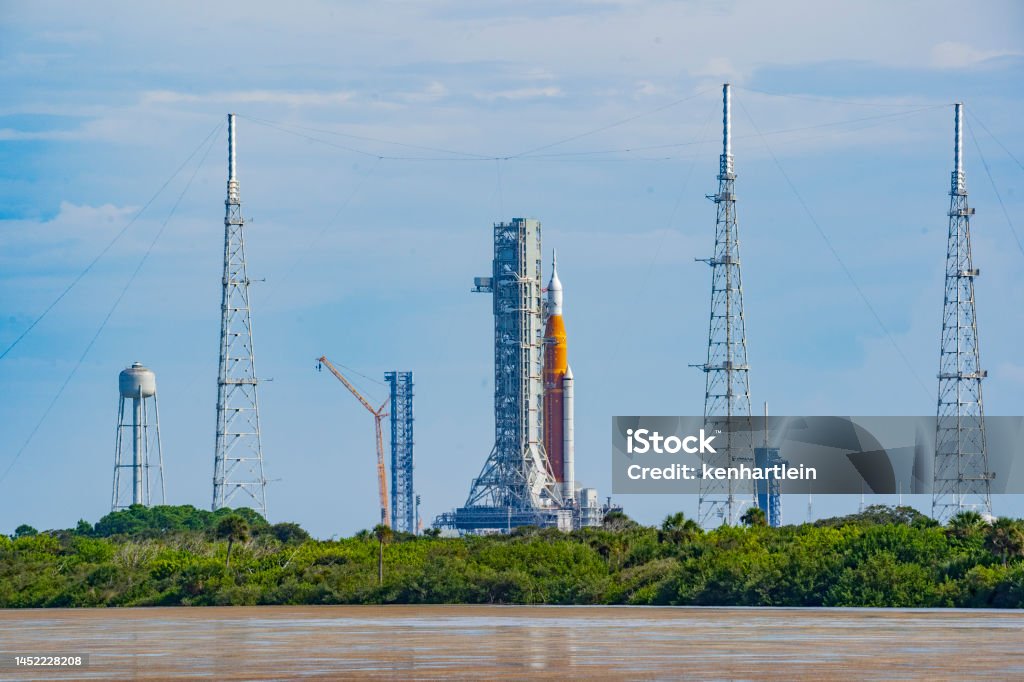
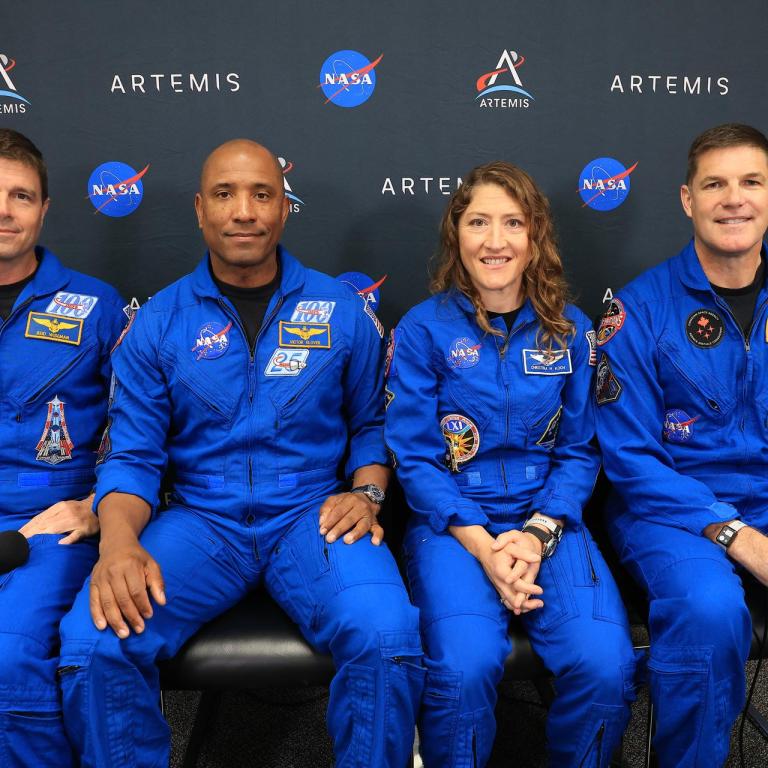
At the center of this milestone is NASA’s Artemis program, a multi-phase initiative designed to establish a sustainable human presence on the Moon. The April 1, 2026, mission, widely associated with Artemis II marks a critical step forward: the first crewed journey around the Moon since the Apollo era. Unlike earlier missions, this is not a race against geopolitical rivals, but a foundation for long-term exploration and scientific discovery. The astronauts aboard this historic flight are a diverse and accomplished crew:
- Gregory Reid Wiseman, 27-year Navy veteran, a pilot, an engineer, selected as an astronaut by NASA in 2009 and served as Flight Engineer aboard the International Space Station for Expedition 41 and assigned as Commander of NASA’s Artemis II mission.
- Victor Glover, a United States Navy captain, astronaut from the NASA Astronaut Group 21, Pilot and second-in-command on the Crew-1 SpaceX Crew Dra member of Phi Beta Sigma Fraternity, Inc., first Black person to travel to the moon and assigned as Pilot of NASA’s Artemis II mission.
- Christina Koch, served as flight engineer on the International Space Station (ISS) for Expedition 59, 60 and 61, first woman to travel beyond low Earth orbit and assigned as Mission Specialist I of NASA’s Artemis II mission.
- Jeremy Hansen, a Canadian astronaut from the Canadian Space Agency, fighter pilot, physicist and former aquanaut, assigned as Mission Specialist on the Artemis II flight, and the first non-American on a lunar-vicinity mission.
Plus, we watched NASA’s first female launch director, Charlie Blackwell-Thompson, lead the historic Artemis II mission launch, sending four astronauts around the moon, directing the countdown from Kennedy Space Center. They will travel in the Orion spacecraft, launched by the powerful Space Launch System. Together, these systems represent years of engineering innovation, designed to carry humans deeper into space than ever before with enhanced safety and capability. Their journey will take them thousands of miles beyond Earth’s orbit, looping around the Moon before returning home, a test run for future missions that aim to land astronauts on the lunar surface.
But this mission is about more than distance traveled.
For the first time in history, NASA has committed to landing not only the next man, but also the first woman and the first person of color on the Moon in upcoming Artemis missions. While this April flight will not include the landing itself, it sets the stage for that historic moment. The symbolism is profound: space exploration, once defined by a narrow group, is now being reshaped to reflect a broader humanity.
The mission also signals a shift in purpose. During the Apollo era, the objective was clear—reach the Moon before the Soviet Union. Today, the goals are more expansive: scientific research, technological development, and preparation for even deeper space exploration, including future missions to Mars. The Moon is no longer the final destination; it is a proving ground. International partnerships also play a key role. Agencies and companies from around the world are contributing technology, research, and expertise, turning this mission into a global effort. What was once a symbol of Cold War competition has become a platform for cooperation.
Still, the risks remain real. Space travel is inherently dangerous, and every mission carries uncertainty. Yet it is precisely this balance of risk and reward that has always defined humanity’s greatest achievements.
As the countdown begins, the April 1 launch stands as a powerful reminder: exploration is not a relic of the past, it is a calling that continues to push boundaries. Just as Neil Armstrong once took a “giant leap for mankind,” this new generation of astronauts carries that legacy forward, not simply to revisit history, but to write its next chapter.
The Moon is no longer a distant dream. Once again, it is within reach.