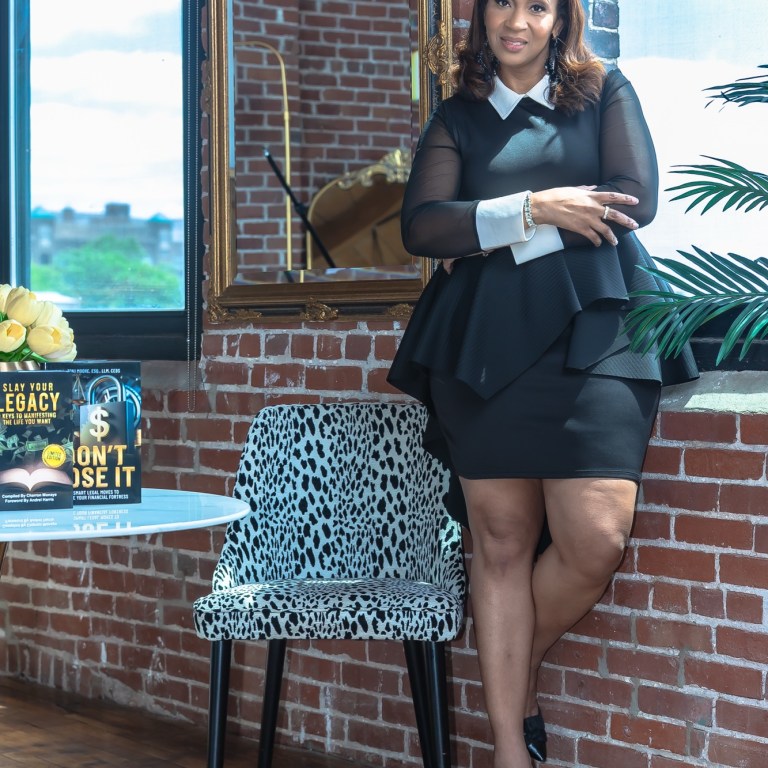

Written By: Charron Monaye
In the business world, entrepreneurship and ownership are often treated as interchangeable terms. Yet, while they share similarities—risk-taking, financial ambition, and personal investment, their core principles, goals, and strategies are distinct. Choosing the right path depends on your personality, tolerance for risk, and long-term vision. Moreover, understanding how to transition from entrepreneurship to ownership can position business leaders to achieve both wealth and sustainability.

Entrepreneurs: Builders and Innovators
Entrepreneurs are, at their core, problem-solvers. They thrive on disruption, seeing opportunities where others see obstacles. Entrepreneurship is about creation, and the energy often comes from building something from scratch: launching a new product, service, or business that challenges the market status quo.
Take Robert F. Smith, founder of Vista Equity Partners, a leading investment firm focused on enterprise software. Smith recognized early that many tech companies with strong fundamentals lacked operational discipline. By building Vista with a rigorous focus on process, Smith didn’t just launch a successful venture, he created a scalable investment model that could be replicated across hundreds of companies. Today, Vista manages tens of billions in assets and has become a major force in enterprise software, illustrating how entrepreneurial vision can evolve into long‑term ownership and value creation.
Another standout example is Richelieu Dennis, the entrepreneur behind Sundial Brands and cofounder of Essence Ventures. Starting from humble beginnings selling handcrafted shea butter products, Dennis turned Sundial into one of the most influential multicultural personal care companies in the world. When Sundial sold to Unilever, Dennis didn’t walk away, he continued leading and expanding his businesses with strategic ownership, ultimately launching the Essence Festival and significant media properties. His journey reflects the transition from founder and innovator to owner and steward of diversified, culturally impactful enterprises.

And there’s Mellody Hobson, President and co‑CEO of Ariel Investments and former chair of Starbucks, one of the most prominent Black women in global business today. Hobson has led one of the largest African‑American‑owned investment firms and steered corporate governance at major public companies, demonstrating how entrepreneurial skill can translate into ownership and strategic stewardship across industries. Her leadership in finance and corporate governance highlights the strength of combining entrepreneurial insight with long‑term ownership responsibilities.
Entrepreneurs like Smith, Dennis, and Hobson take risks, often in uncertain markets, and embrace flexibility. They work long hours, adapt constantly, and lean into ambiguity. While the potential for outsized growth is exciting, volatility and setbacks are part of the journey. Entrepreneurs also tend to prioritize scalability. The goal is not just to make money, but to build something that can grow exponentially. Growth often comes at the expense of stability, meaning entrepreneurs may face financial and operational volatility, especially in the early stages.
Owners: Stewards of Value
Ownership, in contrast, emphasizes management and preservation. Business owners focus on sustaining and growing an existing asset. They prioritize predictable revenue, operational efficiency, and long-term wealth accumulation. Ownership can take many forms: buying an established business, acquiring franchises, investing in real estate, or even managing a portfolio of businesses. Here are three prominent Black business owners whose careers exemplify this long‑term ownership mindset:
- Cathy Hughes – Founder and long‑time owner of Urban One (formerly Radio One), the largest African‑American–owned media company in the U.S. Her leadership transformed a boutique radio business into a diversified multimedia platform spanning radio, television, and digital, elevating Black voices and perspectives in mass media over decades.
- Robert L. Johnson – Owner and founder of BET (Black Entertainment Television), the first profitable Black‑owned cable television network. Though he later sold BET to Viacom, Johnson’s decades of ownership and strategic stewardship helped build a cultural institution that reshaped modern media and created generational wealth through ownership of intellectual property and brand equity.
- Tyler Perry – Founder and owner of Tyler Perry Studios, a massive film and television production complex in Atlanta. Perry’s ownership extends beyond creative enterprise: the studio owns extensive production infrastructure, land, and intellectual property, making it one of the most successful Black‑owned entertainment portfolios in the world. This legacy of ownership enables ongoing revenue, influence, and industry power.

These examples illustrate how ownership differs from entrepreneurship: owners steward established assets, maximize value, and sustain influence over decades. They don’t simply launch business models, they manage ecosystems of value, ensure financial stability, and build institutions that last beyond founding narratives.
While entrepreneurship thrives on creation and innovation, ownership thrives on stability, control, and long-term planning. Owners work to maximize the value of what already exists. Warren Buffett, for instance, built his fortune by acquiring and managing companies with strong fundamentals, rather than constantly creating new businesses. His approach highlights the advantages of ownership: financial predictability, lower operational chaos, and the ability to grow assets steadily over time.
Ownership is less about the adrenaline rush of launching a new venture and more about strategy, foresight, and stewardship. It allows business leaders to leverage existing assets for long-term growth and wealth preservation.
The Benefits of Transitioning from Entrepreneur to Owner
Some of the most successful business figures understand the power of combining entrepreneurship and ownership. Starting as an entrepreneur allows you to innovate, learn, and scale, while transitioning to ownership allows you to protect your wealth, reduce risk, and generate sustainable returns.
Transitioning is a strategic move that can transform a high-energy venture into a long-lasting asset. Here are five key strategies to make that transition successfully:
- Systematize Your Business
Entrepreneurs often run their companies on intuition and energy, handling multiple roles themselves. To move toward ownership, create processes and standard operating procedures (SOPs) that allow your business to run smoothly without your constant involvement. This not only increases efficiency but also raises the business’ value to potential buyers or investors. - Focus on Stable Revenue
Ownership emphasizes consistency over rapid growth. Rather than chasing the latest trend, focus on building predictable income streams. Subscription models, recurring contracts, and diversified revenue channels can stabilize cash flow and reduce the volatility that entrepreneurs often face. - Build a Strong Leadership Team
Entrepreneurs often operate as solopreneurs or micro-managers. Owners delegate. Assemble a leadership team you trust to manage day-to-day operations. This frees you to focus on strategy, long-term planning, and new investment opportunities while ensuring your business thrives without your constant oversight. - Protect Your Intellectual Property and Assets
Intellectual property, client databases, proprietary systems, and trade secrets are key assets that enhance long-term value. Secure patents, trademarks, and copyrights to ensure your business is both defensible and attractive to investors or successors. Protecting your assets transforms a business from a short-term venture into a valuable long-term property. - Plan an Exit or Transition Strategy
Ownership requires a clear vision of the future. Whether your goal is to sell, franchise, or pass the business to family or partners, a well-defined transition plan ensures continuity and preserves the value you’ve built. An exit strategy transforms entrepreneurial energy into sustainable wealth creation.

Case Examples: From Startup to Sustainable Asset
Consider companies like Whole Foods, which began as a small health-food store and grew through entrepreneurial energy. Eventually, the company transitioned into a more ownership-driven model, with operational systems and leadership teams in place, before being acquired by Amazon. The founders’ shift from innovation-focused entrepreneurship to structured ownership created a stable, high-value asset.
Similarly, tech entrepreneurs who sell their startups and retain a management role exemplify this hybrid approach. They innovate, scale, and then transition to ownership, leveraging the established business as a predictable income source while exploring new ventures.
Which Path Should You Choose?
The decision between entrepreneurship and ownership depends on your risk tolerance, personal goals, and long-term vision.
- Entrepreneurship suits those drawn to innovation, rapid growth, and the thrill of creating something new. It requires energy, resilience, and a willingness to embrace uncertainty.
- Ownership appeals to those seeking stability, predictable income, and sustainable wealth accumulation. It emphasizes stewardship, strategic decision-making, and long-term planning.
Many of today’s top business leaders successfully blend both paths. They start as entrepreneurs, building and scaling ventures, then shift toward ownership as their businesses mature, creating enduring value and long-term wealth.
The Bottom Line
Neither path is inherently better. Entrepreneurship offers excitement, growth potential, and the opportunity to leave a legacy through innovation. Ownership offers stability, predictability, and the ability to preserve and grow wealth. The smartest business leaders recognize when to innovate and when to steward, using both approaches to maximize opportunity and secure long-term success.
Whether you’re creating your first startup or managing a portfolio of businesses, the key is aligning your approach with your personality, goals, and vision. The combination of entrepreneurial spirit and ownership discipline can transform ambition into enduring legacy.