

Written By: Charron Monaye
The United States has officially crossed a historic financial milestone: the national debt has surpassed $40 trillion. For many Americans, that number feels so massive it’s difficult to comprehend. After all, what does $40 trillion actually mean when you’re trying to pay your mortgage, buy groceries, maintain healthy hair, raise a family, or save for retirement?
The truth is that while the national debt may seem like a distant political issue, it has real-world consequences that can eventually affect the everyday person in ways both visible and invisible.
How Did We Get Here?
The national debt is the total amount of money the federal government has borrowed over time. When the government spends more money than it collects in taxes and revenue during a given year, it runs a budget deficit. To cover the difference, it borrows money. Over decades, those deficits accumulate into national debt. America’s debt didn’t appear overnight. It has been growing for decades due to a combination of factors:
- Rising costs of Social Security and Medicare as the population ages.
- Increased military and defense spending.
- Tax cuts that reduced government revenue.
- Emergency spending during economic crises, including the COVID-19 pandemic.
- Growing interest payments on money already borrowed.
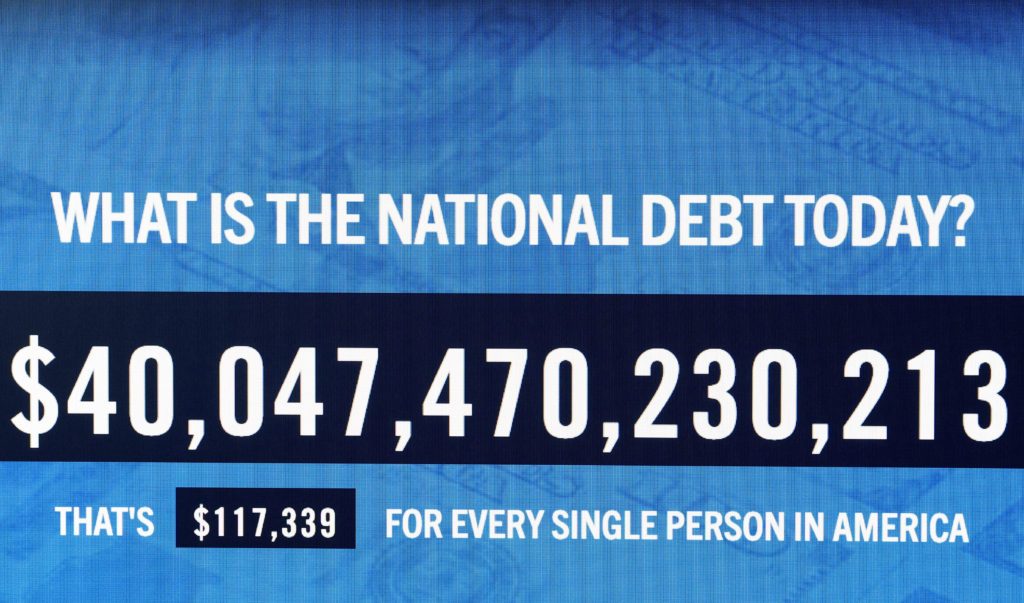
In fact, the debt has more than doubled since 2017, with roughly one-third of that increase occurring during the pandemic and the remainder driven by ongoing gaps between government spending and revenue.
Why $40 Trillion Matters
Numbers this large can feel abstract, but the debt isn’t just an accounting figure. Every dollar borrowed must eventually be repaid or refinanced, and the interest on that debt continues to grow.
Today, the federal government is spending more money on interest payments than it spends on many major programs. Interest costs have become one of the largest items in the federal budget. Think of it like carrying a credit card balance. The larger the balance becomes, the more money goes toward interest rather than paying for things you actually need. The same principle applies to the federal government.
How This Could Affect Everyday Americans
Higher Interest Rates
When the government borrows heavily, it can contribute to higher borrowing costs throughout the economy. That can mean:
- More expensive mortgages
- Higher car loan payments
- Increased credit card interest rates
- Costlier small-business loans
For families already stretching every paycheck, even a small increase in interest rates can make a noticeable difference.
- Increased Cost of Living: While national debt doesn’t automatically cause inflation, large and persistent deficits can add pressure to prices over time. When borrowing and spending rise faster than economic growth, consumers may eventually feel it at the grocery store, gas pump, and retail checkout line.
- Fewer Government Resources: As more tax dollars go toward paying interest on debt, less money is available for other priorities such as infrastructure, education, healthcare programs, disaster relief, and community investments.
- Potential Tax Changes: At some point, policymakers may face difficult decisions. Those solutions often include spending cuts, tax increases, or a combination of both. While no one knows exactly what future policies will look like, Americans could eventually see changes that affect household finances.
- Retirement Concerns: Programs like Social Security and Medicare are among the largest federal expenditures. As debt grows and the population ages, debates over how to fund these programs will likely intensify. Future retirees may face changes in benefits, eligibility, or funding structures.
Should You Panic?
Not necessarily! The United States remains one of the world’s largest economies, and investors around the globe continue to purchase U.S. Treasury securities. The government has significant economic tools available to manage financial challenges. However, economists and fiscal experts across the political spectrum agree on one point: debt cannot continue growing faster than the economy forever without consequences. The longer structural issues remain unresolved, the more difficult and expensive the solutions become.
While individuals cannot control federal spending, they can strengthen their own financial foundation.
- Reduce high-interest debt whenever possible. Rising interest rates can make personal debt even more expensive.
- Build an emergency fund. Economic uncertainty is easier to navigate when savings are available.
- Stay informed. Understanding how government policies affect your finances allows you to make smarter decisions about spending, investing, and long-term planning.
What is the Bottom Line??
America’s $40 trillion national debt is more than a headline, it is a reflection of decades of borrowing, spending, economic challenges, and political decisions. While most Americans won’t wake up tomorrow feeling the direct impact of this milestone, its effects can gradually influence everything from mortgage rates and retirement planning to taxes and the overall cost of living.
The national debt may belong to the government, but its consequences ultimately touch every household. The question is not whether the debt matters. The question is how prepared we are for the financial future it may create.